Education in emergencies
Supporting governments to respond to crisis while strengthening systems for recovery and reform.
Helping education systems withstand and recover from disruption.
Crises disrupt education systems in immediate and far-reaching ways. Schools may close or operate intermittently, teachers can be displaced, and the most marginalised learners are often at greatest risk of being left behind.
These pressures extend beyond conflict. Climate-related shocks, including floods, drought, and extreme weather, are increasing the frequency and duration of disruption, often in already fragile systems. Public health emergencies such as the COVID-19 pandemic have also shown how quickly learning can be interrupted, exposing weaknesses in remote provision and contributing to significant learning loss.
Restoring access is essential. But maintaining learning quality and continuity in uncertain and resource-constrained environments is a far greater challenge. This is where responses can fall short: short-term interventions may bypass national systems or fragment delivery. Without clear priorities, coordination, and evidence-informed decision-making, crisis response is less likely to strengthen the systems needed to support long-term recovery and resilience.
Our vision
The most effective emergency responses protect learning in the immediate term while strengthening the systems that will carry recovery forward. In fragile and crisis-affected contexts, this means helping governments and partners make practical, evidence-informed decisions under pressure, while keeping quality, continuity, and long-term resilience in view.
We work across response and recovery, bringing together research, technical assistance, and implementation support to help education systems adapt as conditions change.
Our aim is to support system-led recovery: strengthening local capability, aligning decisions around clear priorities, and helping ministries and partners build a more resilient foundation for the future.
How we add value
Through targeted, catalytic technical assistance, we help governments and partners to:
- maintain continuity of learning through practical, context-sensitive delivery
- strengthen teacher capability to support learners affected
- adapt curriculum, pedagogy, and assessment to protect learning quality
- generate and use evidence to inform real-time decision-making
- align short-term response with longer-term priorities
- build system capacity so recovery is locally led, sustained, and resilient over time.
Expert support to protect learning in every context
Gaza
Nigeria
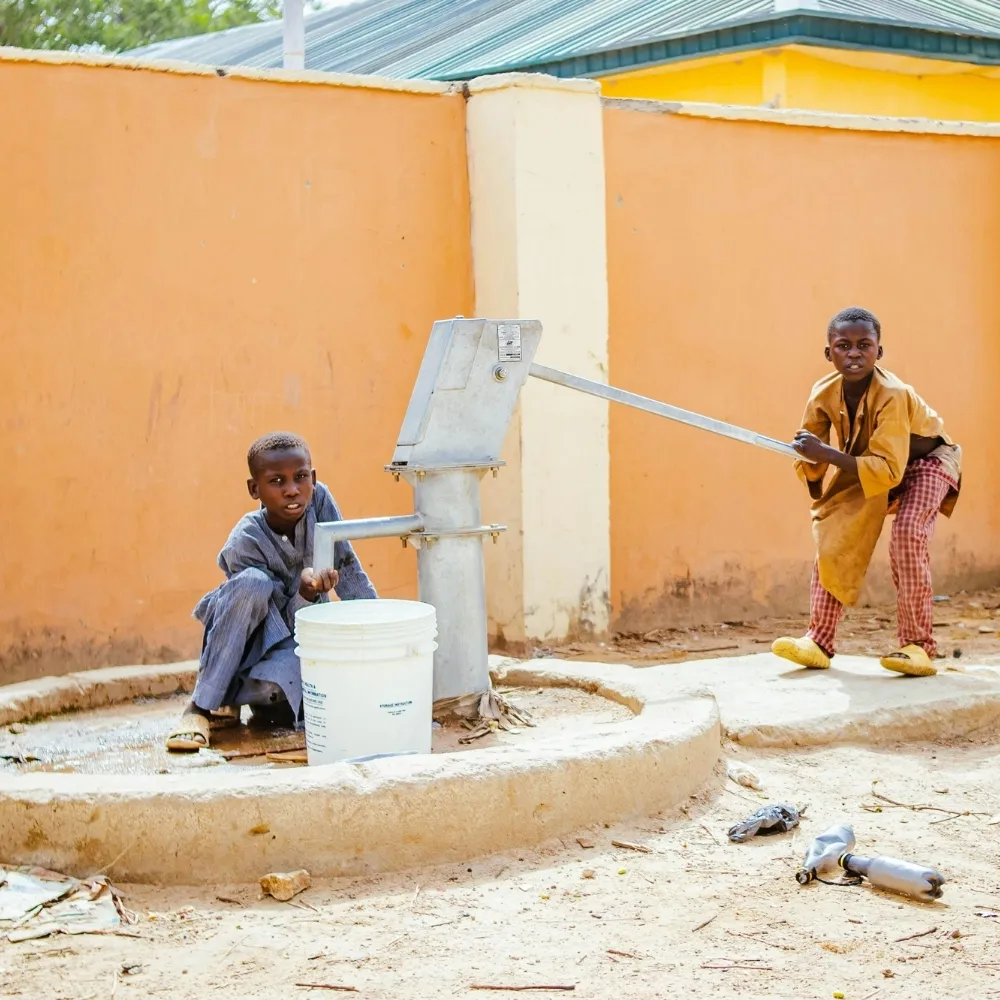
In northeast Nigeria, we have worked with government and partners to design delivery approaches for out-of-school and displaced learners, grounded in situational and security assessments and shaped by the realities of access, safeguarding, and provision in conflict-affected areas.
Syria and Palestine
We also bring experience in refugee education, including work with Syrian and Palestinian learners and research on teacher management in high-mobility contexts, to inform practical system responses.
SPOTLIGHT
Supporting systems as they respond to climate-related disruption and public health emergencies
Alongside conflict settings, we support systems responding to climate-related disruption and public health emergencies, strengthening capacity to maintain learning continuity, support teachers, and guide recovery in uncertain conditions.
Across these contexts, we focus on responses that reflect system constraints, strengthen local capability, and support recovery over time.
Our education in emergencies work
Latest insights and research
Climate change and education: from evidence to action
The necessity of female teachers for girls’ education in crisis settings
Climate change and education in Kenya
Teacher management in refugee settings: Uganda
The impact of climate and environmental change on education in Rwanda
Supporting teachers of refugees
Climate change and education in Turkana, Kenya
Teacher management in refugee settings: Kenya
Teacher management in refugee settings: Jordan
Assisting teachers to support learning recovery
Teacher management in refugee settings: Ethiopia
edt supports UNICEF to provide continuous access to education for children in Gaza
Let's work together
If you are looking to strengthen education system response in times of crisis, while laying the foundations for recovery and reform, we would be glad to explore how we can support your priorities.
Speak to our specialist
Sabine leads our team of in-house experts, providing technical assistance to support government-led reform initiatives. With extensive experience partnering with ministries of education, her work focuses on helping governments translate strategy into sustainable impact across education systems.